


0
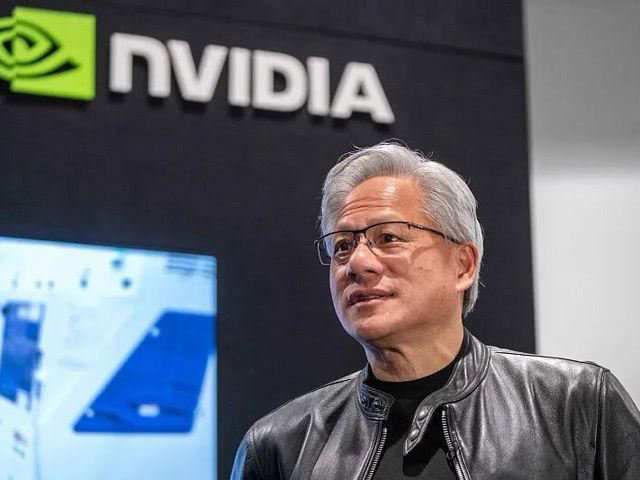
NVIDIA founder Jensen Huang has returned as the company's president and chief executive officer, becoming a major focus of global financial markets. Less than two weeks after his departure, NVIDIA's board of directors unanimously approved his reinstatement. The announcement quickly eased concerns over the company's management stability and triggered a rebound in NVIDIA shares and other AI-related stocks. From a financial market perspective, this is more than a corporate leadership change. It highlights how closely investors associate the future of the AI industry with the leadership of its most influential companies.
Huang has long played a central role in NVIDIA's research and development, product strategy and business expansion. He was instrumental in transforming the company from a graphics processor manufacturer into a global AI chip leader. As artificial intelligence continues to advance rapidly, NVIDIA has become a key supplier of AI infrastructure, with its chips widely used in data centers, cloud computing and generative AI applications. His departure had therefore raised concerns about the continuity of NVIDIA's strategy, its ability to maintain technological innovation and its relationships across the industry. His return is expected to stabilize investor expectations and reduce uncertainty surrounding the company's leadership transition.
In terms of stock market performance, the announcement improved market sentiment and attracted renewed interest in NVIDIA and parts of the AI supply chain. This suggests that investors' previous caution toward technology stocks was driven not only by valuation concerns and industry competition, but also by uncertainty over corporate leadership. With Huang back at the helm, some capital has returned to semiconductor and AI-related stocks, helping improve short-term risk appetite in the technology sector.
More importantly, NVIDIA occupies a central position in the global AI supply chain. In recent years, major technology companies have significantly increased capital expenditure to expand data center capacity, driving demand for GPUs, memory chips, high-speed networking equipment and advanced packaging. As a key supplier in this ecosystem, NVIDIA's performance influences not only its own share price but also broader market expectations for the AI industry's growth. Huang's return suggests that the company's existing strategic direction is likely to remain intact, helping restore confidence among investors and industry partners.

However, the leadership change does not mean that the risks facing the AI sector have disappeared. The key question for markets remains whether massive AI investments can generate sustainable revenue and profits. Although major technology companies continue to expand spending on computing infrastructure, the investment payback period, pace of commercialization and long-term profitability remain uncertain. If capital expenditure continues to rise without generating corresponding revenue growth, investors may reassess valuations across the AI sector.
NVIDIA also faces high market expectations. As one of the biggest beneficiaries of the AI investment boom, its share price already reflects considerable optimism about future growth. If chip demand slows, competition intensifies or major customers reduce data center spending, NVIDIA shares could still come under pressure. Huang's return may improve market sentiment, but the company's long-term performance will ultimately depend on order growth, data center revenue, profit margins and customer capital expenditure.
At the broader US stock market level, NVIDIA's significant weighting among major technology companies means that movements in its share price can influence the Nasdaq and overall market risk appetite. A sustained rebound in AI stocks could attract additional capital into technology shares, providing support for US equities. However, if future earnings fail to meet market expectations, these stocks could face renewed selling pressure, potentially weighing on the broader technology sector.
In the foreign exchange market, gains in technology stocks generally help improve global risk sentiment. Some investors may consequently reduce their exposure to traditional safe-haven assets, potentially putting pressure on the US dollar. On the other hand, if AI investment continues to strengthen expectations for US corporate earnings and economic growth, international investors may increase their allocations to US assets, providing support for the dollar. Therefore, the impact of NVIDIA's rebound on the currency market is unlikely to be one-directional and will also depend on Federal Reserve policy, US Treasury yields and global capital flows.
Overall, Huang's return to NVIDIA has eased concerns over management stability and provided a boost to confidence across the AI supply chain. However, the long-term outlook for NVIDIA and the broader AI sector will still depend on technological competitiveness, actual earnings growth and the returns generated by AI investments. For investors, the rebound signals an improvement in market sentiment, but whether it can develop into a sustained upward trend will ultimately depend on future earnings results and industry demand.
更多报道







2026 © - All Rights Reserved by BCR Co Pty Ltd
风险披露:衍生品在场外交易,采用保证金交易,意味着具有高风险水平,有可能会损失所有投资。这些产品并不适合所有投资者。在进行交易之前,请确保您充分了解风险,并仔细考虑您的财务状况和交易经验。如有必要,请在与BCR开设账户之前咨询独立的财务顾问。
BCR Co Pty Ltd(公司编号1975046)是一家根据英属维尔京群岛法律注册成立的公司,注册地址为英属维尔京群岛托尔托拉岛罗德镇Wickham’s Cay 1的Trident Chambers,并受英属维尔京群岛金融服务委员会监管,牌照号为SIBA/L/19/1122。
Open Bridge Limited(公司编号16701394)是一家根据2006年《公司法》注册成立并在英格兰和威尔士注册的公司,注册地址为 Kemp House, 160 City Road, London, England, EC1V 2NX. Open Bridge Limited仅作为BCR Co Pty Ltd的支付处理方运作,并不代表其提供任何金融、交易或投资服务。Open Bridge Limited的角色仅限于支付处理。


 English
 简体中文
 繁體中文
 Bahasa
Melayu
 Tiếng
Việt
 ไทย
 日本語
 한국어
 ភាសាខ្មែរ
 español
